Intermediate Modern Standard Arabic Online Course: You can read the Arabic script, build simple sentences, and handle short conversations. Now it is time to move beyond the basics, toward newspaper articles, longer stories, and conversations where you explain your ideas instead of just answering questions.
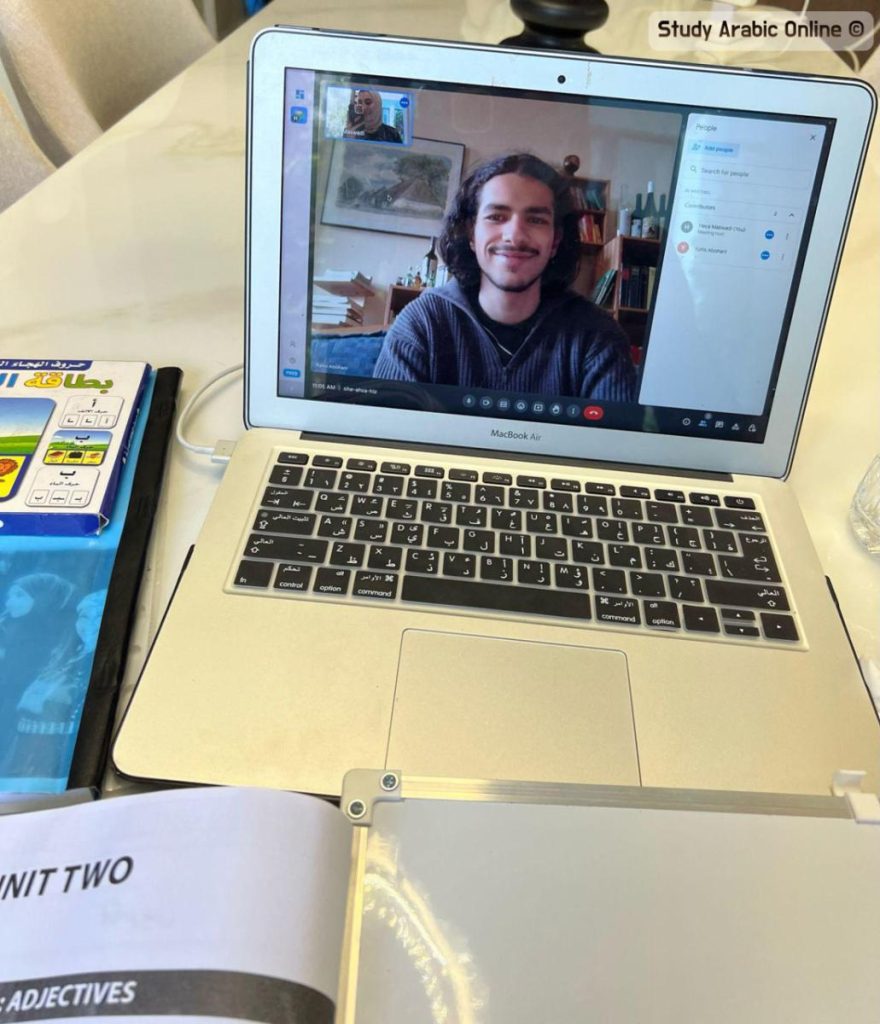
Our Intermediate Modern Standard Arabic Online Course is designed for exactly this stage. You study live with experienced native Arabic tutors, one to one or in a small group, and build the grammar, vocabulary, and confidence you need to use formal Arabic in real situations.
Below, you will find what the intermediate course covers, what you will be able to do once you complete it, and how to start with a free trial lesson.
Book a Free Modern Standard Arabic Trial Lesson Online
Start your Modern Standard Arabic journey with a free online trial lesson. You will meet your certified tutor, talk about what you want to achieve, and experience a real one-to-one lesson. There is no payment and no commitment, just a simple first step toward reading, writing, and speaking Arabic.

Table of Contents
What Is Intermediate Modern Standard Arabic?
The intermediate level is for learners who have a solid foundation in Modern Standard Arabic (MSA). You already read and write with ease, know the core grammar, and can talk about familiar topics in simple sentences.
At this stage, the focus shifts from building blocks to real language. You work with longer and more authentic texts, learn more complex structures, and begin expressing opinions, comparing ideas, and telling stories in Arabic.
Lessons are taught mainly in Arabic, with English used only when a point needs extra clarity. This steady exposure helps you think in Arabic rather than translating word by word.
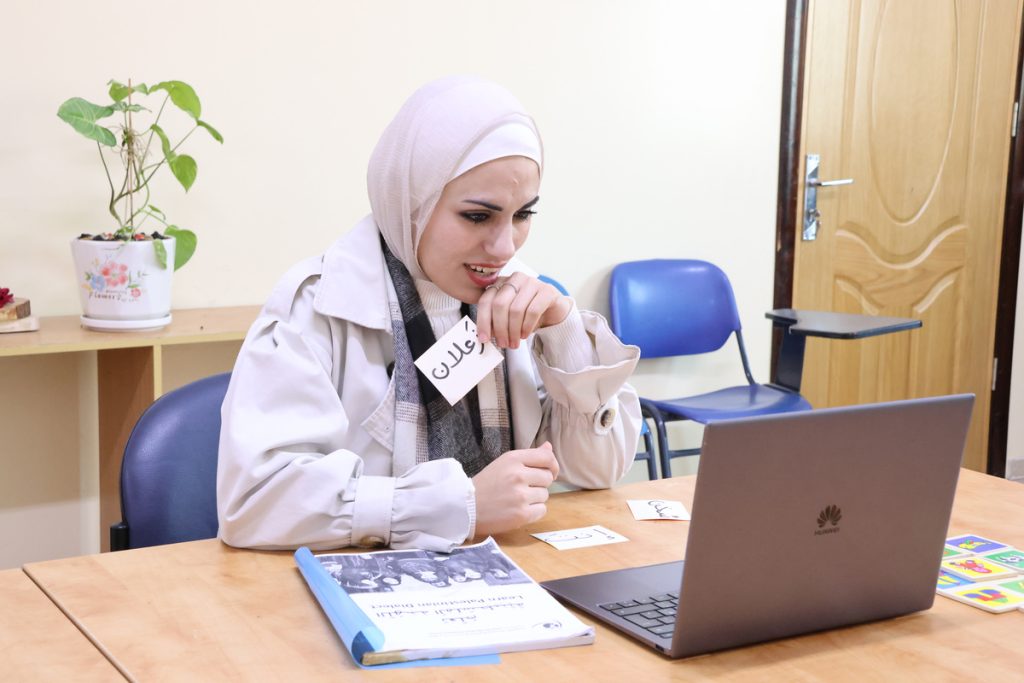
From Beginner to Intermediate: What Changes?
The step from beginner to intermediate Arabic is less about learning new letters or basic words and more about handling real language. Here is how your lessons shift:
- Short, controlled dialogues give way to open discussion
- Adapted reading passages are replaced by authentic articles and extracts
- Single sentences grow into paragraphs, summaries, and short essays
- Grammar moves from basic patterns to passive forms, conditionals, and complex verbs
- English plays a smaller role as lessons move mainly into Arabic
This shift can feel demanding at first, but it is also the point where Arabic starts to feel truly useful.
What Will You Achieve at the Intermediate Level?
By the time you complete the intermediate course, you should be able to:
- Hold longer, more confident conversations on a wide range of topics
- Give short presentations in Arabic on subjects you have studied
- Read longer texts, such as articles, biographies, and short literary extracts
- Write longer pieces, from descriptive paragraphs to a simple CV
- Understand the main ideas of complex texts, including informational and abstract ones
- Recognize common native expressions used in formal Arabic
These skills prepare you for advanced study, where you work with complex texts and express yourself fluently.
Intermediate Modern Standard Arabic Course Overview
| Feature | Details |
|---|---|
| Course | Intermediate Modern Standard Arabic Online Course |
| Language | Modern Standard Arabic (Fusha) |
| Level | Intermediate |
| Prior knowledge | A solid foundation in MSA reading, writing, and grammar |
| Teaching language | Mainly Arabic, with English support |
| Lesson format | One-to-one or small group |
| Lesson length | 45 minutes |
| Course length | 10 to 100 hours, chosen by the student |
| Hours per week | Flexible, from 1 hour to intensive schedules |
| Self-study | Guided reading, writing, and listening tasks between lessons |
| Participants | 16 to 75 years old |
| Online platforms | Zoom, Skype, WhatsApp, and others |
| Class times | Flexible, in any time zone |
| Learning materials | Free PDF materials and booklet |
| University credit | Available |
| Certificate | Certificate of Completion from the Excellence Center in Palestine |
| Trial lesson | Free |
| Placement test | Free |
| Fees | See our fees and payment options |
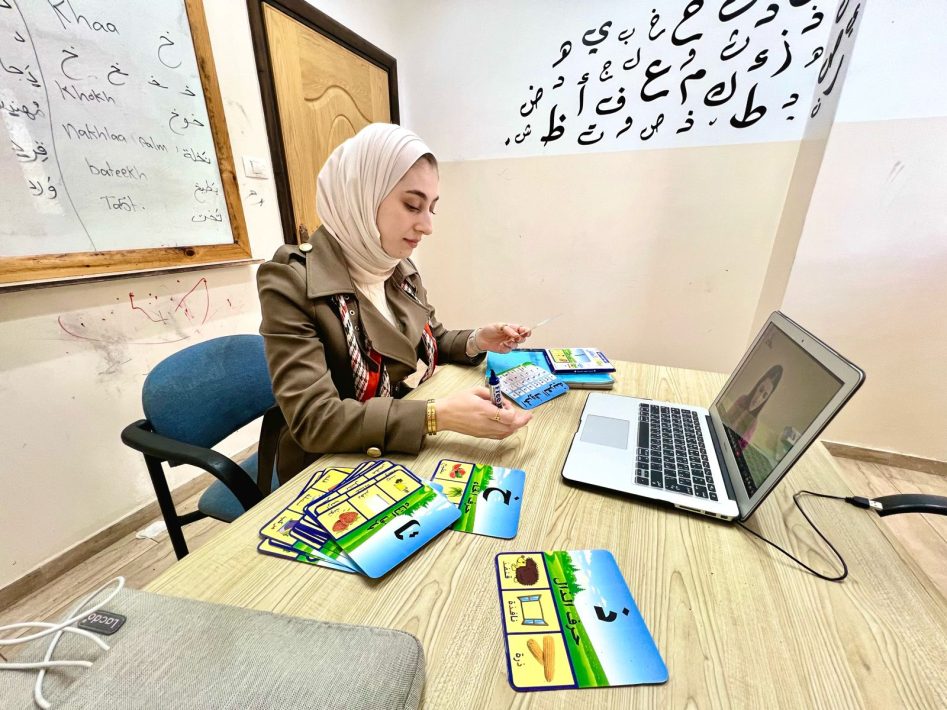

What Will You Study?
Your tutor shapes the course around your level and goals, but intermediate lessons usually cover the following areas.
Grammar
You build on the basics with more advanced structures, including:
- The passive voice
- Comparatives and superlatives
- Irregular and weak verbs
- More complex verb patterns
- The imperative, instructions, and commands
- Time and conditional clauses
- The narrative past tense
- Exclamations and rhetorical questions
Vocabulary and Topics
Intermediate topics move from personal life toward society and culture. Lessons may draw on themes such as:
- Media and the press in the Arab world
- Education systems and universities
- History and well-known historical figures
- Arab writers and their biographies
- Social history and the role of women in Arab society
- Work, careers, and job applications
Reading Longer Texts
You read authentic and adapted material, from news reports and advertisements to biographies and literary extracts. Your tutor helps you identify the main idea, follow the argument, and pick out new vocabulary in context.
Writing
Writing tasks grow longer and more structured. You practice paragraphs, summaries, short reports, and practical texts, such as an Arabic CV.
Speaking and Presentations
Conversation becomes more detailed. You discuss texts, compare points of view, defend an opinion, and prepare short presentations on topics you have studied.
Listening
You practice listening for both general meaning and specific facts, using recordings, interviews, and short media clips.
Reading Strategies You Will Practice
Reading longer Arabic texts is one of the main goals of the intermediate course. Your tutor teaches strategies that help you read faster and understand more:
- Skimming a text first to find its topic and main idea
- Using titles, headings, and key words to predict content
- Identifying the root of an unfamiliar word to guess its meaning
- Spotting linking words that show cause, contrast, and sequence
- Reading without vowel marks, as most real texts are written
- Summarizing each paragraph in a sentence of your own
With practice, these strategies help you read news articles and short essays without stopping at every new word.
Guided Self-Study Between Lessons
At the intermediate level, much of your progress comes from reading and writing on your own. Your tutor sets guided self-study tasks after each lesson, matched to the topic and grammar you are working on.
These tasks can include reading a short article and noting new words, writing a paragraph or summary, completing grammar exercises, or listening to a recording and answering questions. Your tutor reviews your work in the next lesson, so self-study and live practice support each other.
What Does a Typical Intermediate Lesson Look Like?
Every lesson is tailored, but a 45-minute session often follows a pattern like this:
Warm-up conversation: You start by talking briefly in Arabic about your week, a piece of news, or the self-study text you read. This gets you thinking in Arabic right away.
Text or topic work: Your tutor introduces a reading or listening passage linked to the lesson theme. Together, you identify the main ideas, discuss new vocabulary, and look at how sentences are built.
Grammar in context: A grammar point from the text, such as the passive voice or a comparative, is explained and practiced with your own examples.
Speaking task: You use the new language in a short discussion, debate, or mini presentation.
Wrap-up and self-study: Your tutor summarizes key points and sets a reading, writing, or listening task for the next session.
Taught Mainly in Arabic by Native Tutors
Your lessons are taught by experienced native Arabic tutors who specialize in teaching Modern Standard Arabic to international learners. They hold degrees in Arabic or English studies and have taught students from more than 35 countries.
They understand the typical challenges of the intermediate stage, such as long sentences, unfamiliar verb forms, and formal vocabulary, and they break these down into clear, practical steps.
Your tutor gives you regular feedback, corrects your writing and speaking, and gradually raises the challenge as your confidence grows.
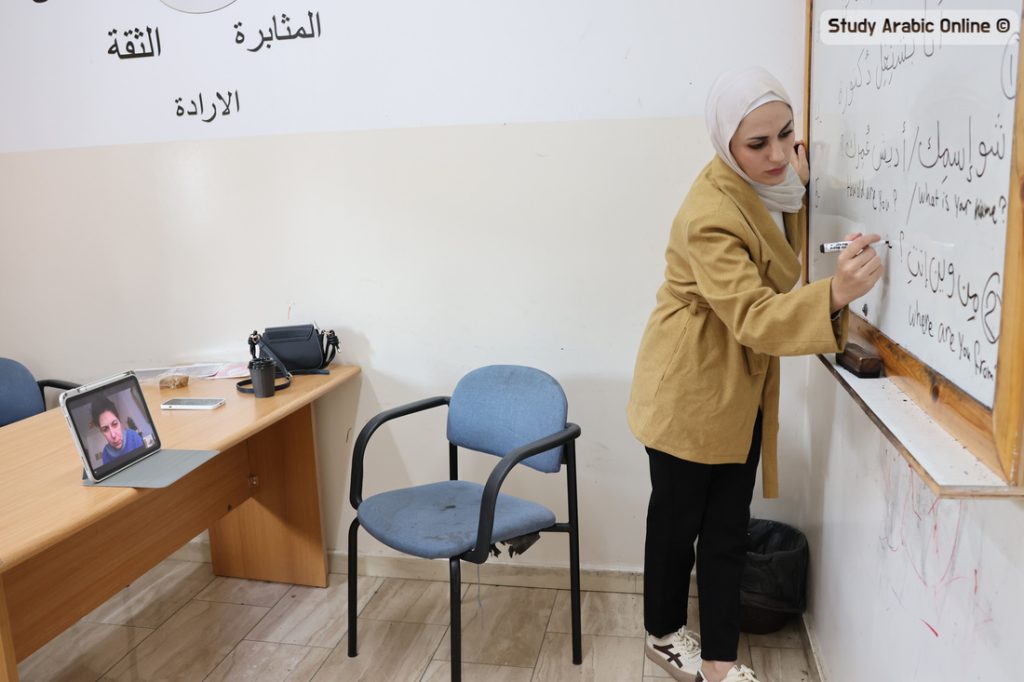

One-to-One Intermediate Modern Standard Arabic Online Course
You can choose the format that suits you best.
One-to-one lessons give you your tutor’s full attention. Your course follows your goals exactly, whether you are preparing for university, working with Arabic documents, or improving your conversation skills.
Small Group Intermediate Modern Standard Arabic Online Course
Small group courses let you practice discussions, presentations, and reading activities with other learners at the same level. Availability, group size, and schedules may vary.
Modern Standard Arabic and the Spoken Dialects
Modern Standard Arabic is the language of writing, education, and formal speech, while daily conversation across the Arab world takes place in local dialects.
At the intermediate level, many learners decide to add a dialect, such as Levantine Arabic, to their studies. A strong command of MSA makes this much easier, because the dialects share most of their roots, vocabulary, and grammar with the standard language.
Your tutor can point out how formal expressions differ from everyday speech, and you can explore our Modern Standard Arabic online program to see how it fits alongside our dialect courses.
Common Challenges at the Intermediate Stage
Most learners meet the same obstacles at this level. Your tutor plans lessons to help you through each of them.
Long, Complex Sentences
Formal Arabic often links several ideas in one sentence. You learn to break these sentences into parts, find the main verb and subject, and follow the logic from start to finish.
Formal Vocabulary
News and literature use words you rarely hear in conversation. Your tutor teaches vocabulary in families built from the same root, so one new word helps you understand several others.
Verb Patterns
Arabic verbs follow patterns that change their meaning in predictable ways. Recognizing these patterns turns guessing into understanding and speeds up your reading considerably.
Speaking Without Translating
Many intermediate learners still build sentences in English first. Regular, unscripted conversation and presentations help you respond directly in Arabic.
Cultural Themes in Intermediate Lessons
Language and culture go hand in hand. At the intermediate level, your lessons draw on themes that help you understand the Arab world more deeply, such as:
- The development of the Arabic press and modern media
- Well-known Arab writers, poets, and thinkers
- Famous stories and folk tales from Arabic literature
- Education, family life, and social change in the region
- Traditions, celebrations, and everyday customs
Exploring these themes gives you vocabulary you will meet again in the news and in literature, and makes reading and discussion more engaging.
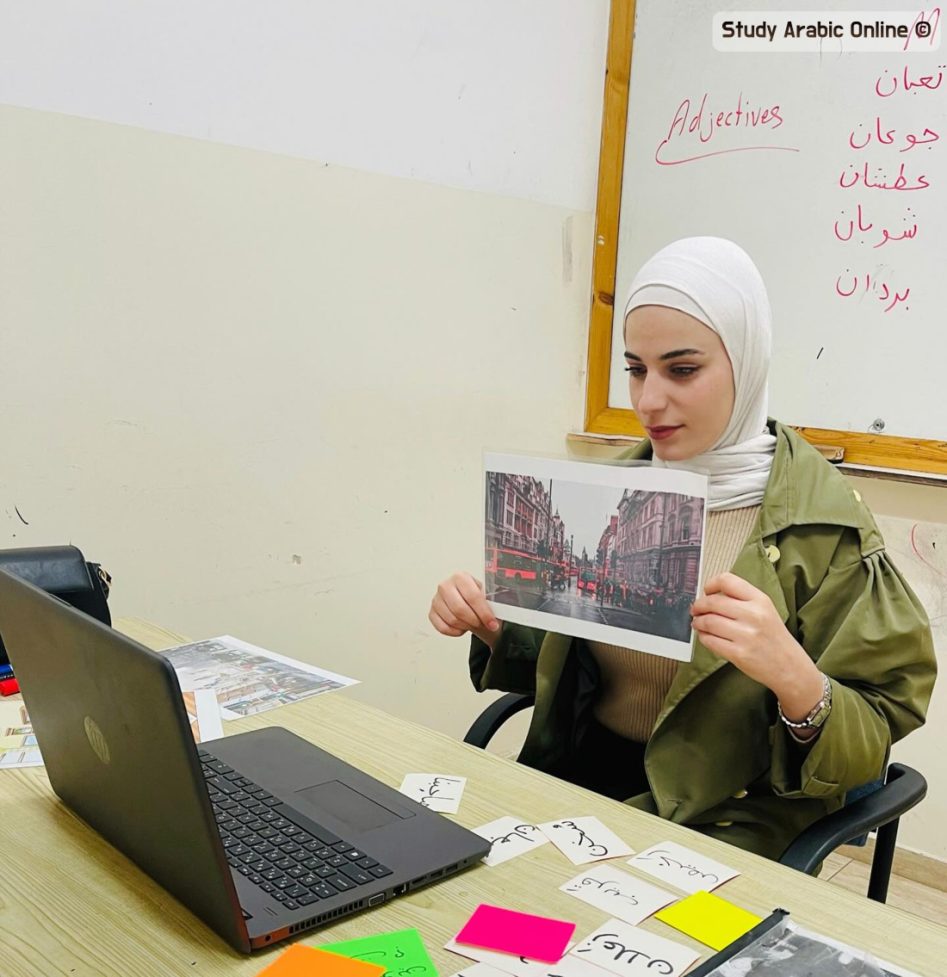

Preparing for University Study or Exams
Many intermediate learners are studying Arabic at university or preparing for an exam or a program abroad. Your tutor can tailor your lessons to these needs, focusing on academic reading, essay writing, presentations, or the specific skills a course or exam requires.
If you are following a university syllabus, you can bring your textbook or coursework to your lessons, and your tutor will help you prepare, review, and practice.
Who Should Take the Intermediate Course?
The intermediate course is a good fit for:
- Learners who completed a beginner or elementary MSA course
- University students of Arabic who want extra practice
- Professionals who read or write Arabic at work
- Researchers who need to work with Arabic sources
- Heritage learners who want to strengthen their formal Arabic
- Learners returning to Arabic after a break
If you are not sure whether this level is right for you, you can take our free placement test or discuss your level during your free trial lesson.
Where You Will Use Intermediate Modern Standard Arabic
The skills you build at this level open the door to many practical uses:
- Following Arabic news websites and broadcasts on familiar topics
- Reading short stories, biographies, and opinion columns
- Writing emails, short reports, and an Arabic CV
- Taking part in university seminars or language exchanges
- Reading work documents, notices, and official letters
- Giving short talks or presentations in Arabic
Your tutor can bring material from any of these areas into your lessons, so practice always connects with real goals.

How Long Does the Intermediate Stage Take?
There is no fixed timetable. Your pace depends on how many hours you study each week, how much self-study you complete, and how strong your foundation is when you start.
Some learners spend a few months at this level with two or three lessons a week, while others move faster on a more intensive schedule. Your tutor reviews your progress regularly and lets you know when you are ready to move on to advanced Modern Standard Arabic.
Learning Materials and Certificate
Your study materials, including a course booklet and PDF resources, are provided free of charge. They are suited to your level and include reading texts, vocabulary lists, grammar explanations, and writing tasks. Lessons can also include authentic material, such as news articles and short literary passages.
Students who successfully complete their course receive a digital Certificate of Completion from the Excellence Center in Palestine. University credit is also available.
Getting Started
Starting your intermediate course takes only a few steps. First, book a free trial lesson. Your tutor will check your level, ask about your goals, and show you how an intermediate lesson works.
After the trial, you choose between one-to-one lessons or a small group and decide how many hours per week suit your schedule. Your tutor then builds a plan that combines reading, writing, speaking, and listening, and your lessons begin at times that work for you. Between sessions, your guided self-study tasks keep your Arabic active.
Reviews and Community Awards
The Excellence Center in Palestine has been honored with several prestigious Community Awards and recognized as the Best Language School and Top Volunteer and Internship Program Provider for 2019, 2021, 2022, 2023, 2024, and 2025. For more details, please visit our profiles on GoOverseas.com and GoAbroad.com.





- +1000 reviews (96.5%) on gooverseas.com
- +190 reviews (96%) on goabroad.com
- Participants’ video testimonials
- Our Awards
Take Your Modern Standard Arabic Further
The intermediate stage is where Arabic starts to open up. Articles become readable, conversations become longer, and you begin to express real opinions in formal Arabic.
At the Excellence Center in Palestine, your intermediate course is flexible and built around your goals, with experienced native tutors guiding every step. You choose the format, the hours, and the schedule, and your tutor makes sure every lesson moves you forward.
Ready to continue? Book your free trial lesson and take the next step in your Modern Standard Arabic journey.
Contact Us
If you have any questions, please feel free to contact us at:
EC Website: https://excellencenter.org/
Instagram: https://www.instagram.com/excellence.center
Facebook page: https://www.facebook.com/ExcellenceCenter
YouTube page: https://www.youtube.com/@theexcellencecenterinpales4961
Tags: Intermediate Arabic Language Course Online, Modern Standard Arabic for Intermediate Learners, Online Intermediate Arabic Classes