For humanitarian workers and journalists operating in the Middle East, effective communication is not just a skill—it is a necessity. Levantine Arabic, widely spoken across countries such as Jordan, Palestine, Lebanon, and Syria, plays a crucial role in enabling meaningful interaction with local communities. Learning this dialect allows professionals in the field to build trust, gather accurate information, and navigate complex social and cultural environments with greater confidence.
Levantine Arabic lessons offered by the Excellence Center in Palestine are specifically designed for humanitarian workers and journalists who need practical, real-world communication skills. These lessons emphasize conversational ability, situational vocabulary, and cultural awareness, ensuring that learners can respond appropriately in sensitive and high-pressure contexts. From conducting interviews and engaging with local stakeholders to understanding regional nuances, this targeted approach helps bridge language gaps effectively.
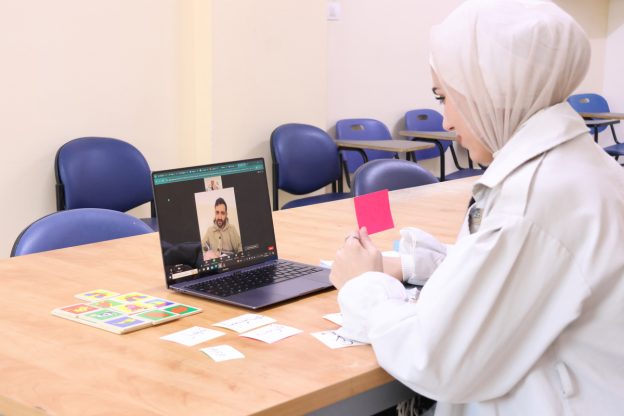
Moreover, online learning platforms such as the Excellence Center in Palestine provide flexible and accessible options for busy professionals who may already be working in demanding environments. With experienced instructors, tailored lesson plans, and interactive sessions, learners can quickly develop the language skills needed for fieldwork. This specialized training empowers humanitarian workers and journalists to perform their roles more effectively while fostering deeper connections with the communities they serve.
Table of Contents
Why Levantine Arabic Training Is Essential for Humanitarian Workers and Journalists
For humanitarian workers, NGO professionals, researchers, diplomats, and journalists working in the Middle East, effective communication is essential. In countries where Levantine Arabic is widely spoken, including Palestine, Jordan, Lebanon, and Syria, relying entirely on interpreters can create delays, limit relationship-building opportunities, and increase the risk of misunderstandings. By enrolling in a Levantine Arabic course and developing practical language skills, professionals can communicate directly with local communities, gain first-hand insights, and improve the accuracy of their work.
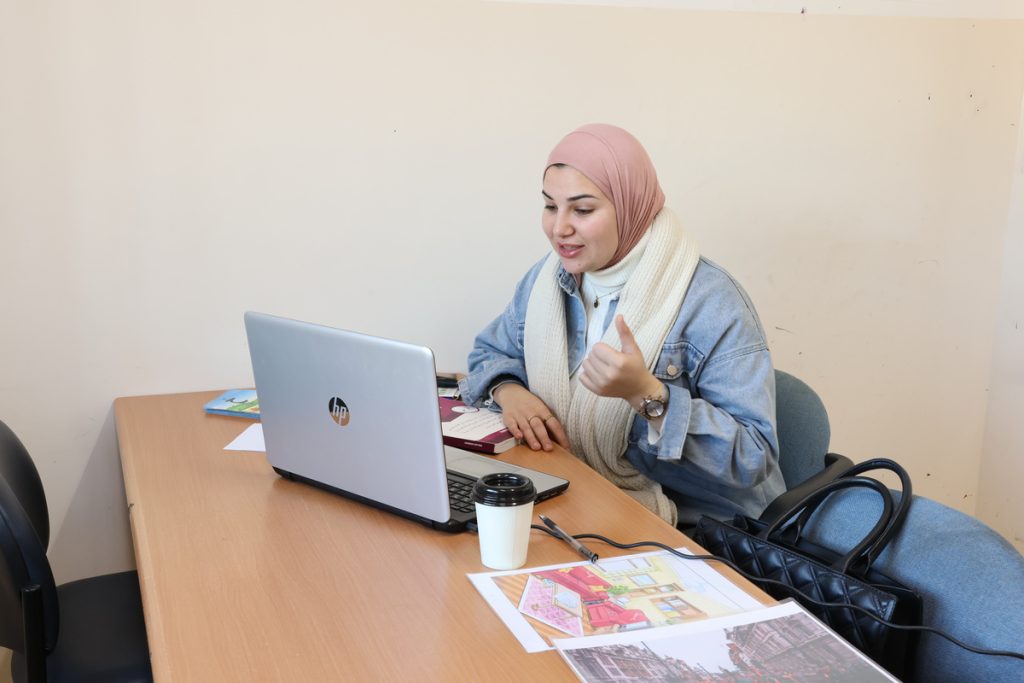
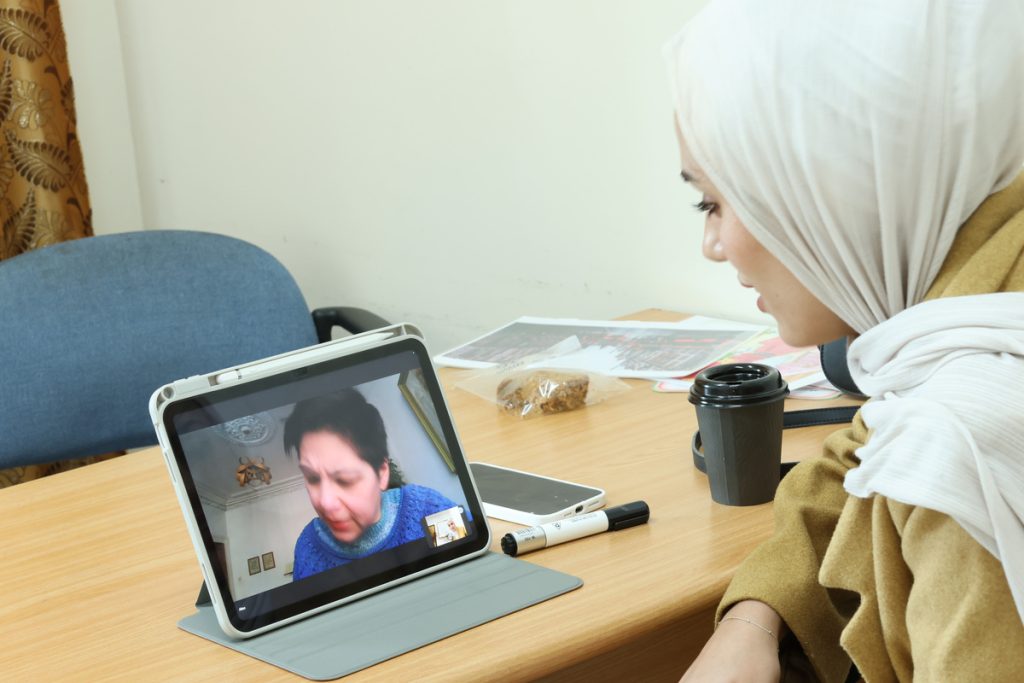
Learning Levantine Arabic allows field professionals to conduct interviews, gather information, and respond to situations more efficiently. Journalists can engage in authentic conversations and capture personal stories more accurately, while humanitarian workers can better assess community needs and provide effective support. As a result, Levantine Arabic training becomes a valuable professional skill that enhances both fieldwork and long-term career development.
Build Trust Through Language and Cultural Understanding
One of the greatest benefits of learning Levantine Arabic is the ability to build trust with local communities. People are often more comfortable sharing their experiences when addressed in their native dialect. Speaking Arabic demonstrates cultural sensitivity, respect, and a genuine commitment to understanding local perspectives.
A high-quality Levantine Arabic course does more than teach vocabulary and grammar. It also introduces learners to regional customs, social norms, and cultural practices that shape daily communication. Understanding these cultural nuances helps humanitarian workers and journalists navigate complex situations, avoid misunderstandings, and establish stronger professional relationships.
Improve Field Effectiveness, Safety, and Decision-Making
Language proficiency can significantly improve effectiveness and safety in the field. Professionals who learn Levantine Arabic can ask questions directly, understand instructions, navigate unfamiliar environments, and respond more quickly during critical situations. This reduces dependence on intermediaries and allows for faster, more informed decision-making.
For journalists, Arabic language training leads to more accurate reporting, stronger source relationships, and richer storytelling. For humanitarian workers and NGO staff, it improves needs assessments, project implementation, and community engagement. Whether working in Palestine, Jordan, Lebanon, or Syria, professionals who invest in Levantine Arabic training gain a practical advantage that helps them operate confidently and effectively in diverse environments.
Learn Levantine Arabic Online with Native Speakers
At the Excellence Center in Palestine, our Levantine Arabic courses are specifically designed for professionals who need real-world communication skills. Through online Levantine Arabic classes with experienced native-speaking teachers, students develop speaking, listening, reading, and cultural competency skills that can be applied immediately in professional and field settings. Whether you are a journalist, humanitarian worker, researcher, diplomat, or international development professional, learning Levantine Arabic online can help you communicate more effectively and make a greater impact in your work.
Take a Free Arabic Lesson Online
You will need to fill out an application form, after which you will have the chance to meet your Palestinian Arabic teacher and participate in a complimentary trial lesson.
The initial Arabic class functions as a no-cost trial (No payment required), and if you find both the Arabic lesson and the teacher satisfactory, you can then move forward with registering and making payment for the online Arabic course fees.
Levantine Arabic Lessons for Children and Young People
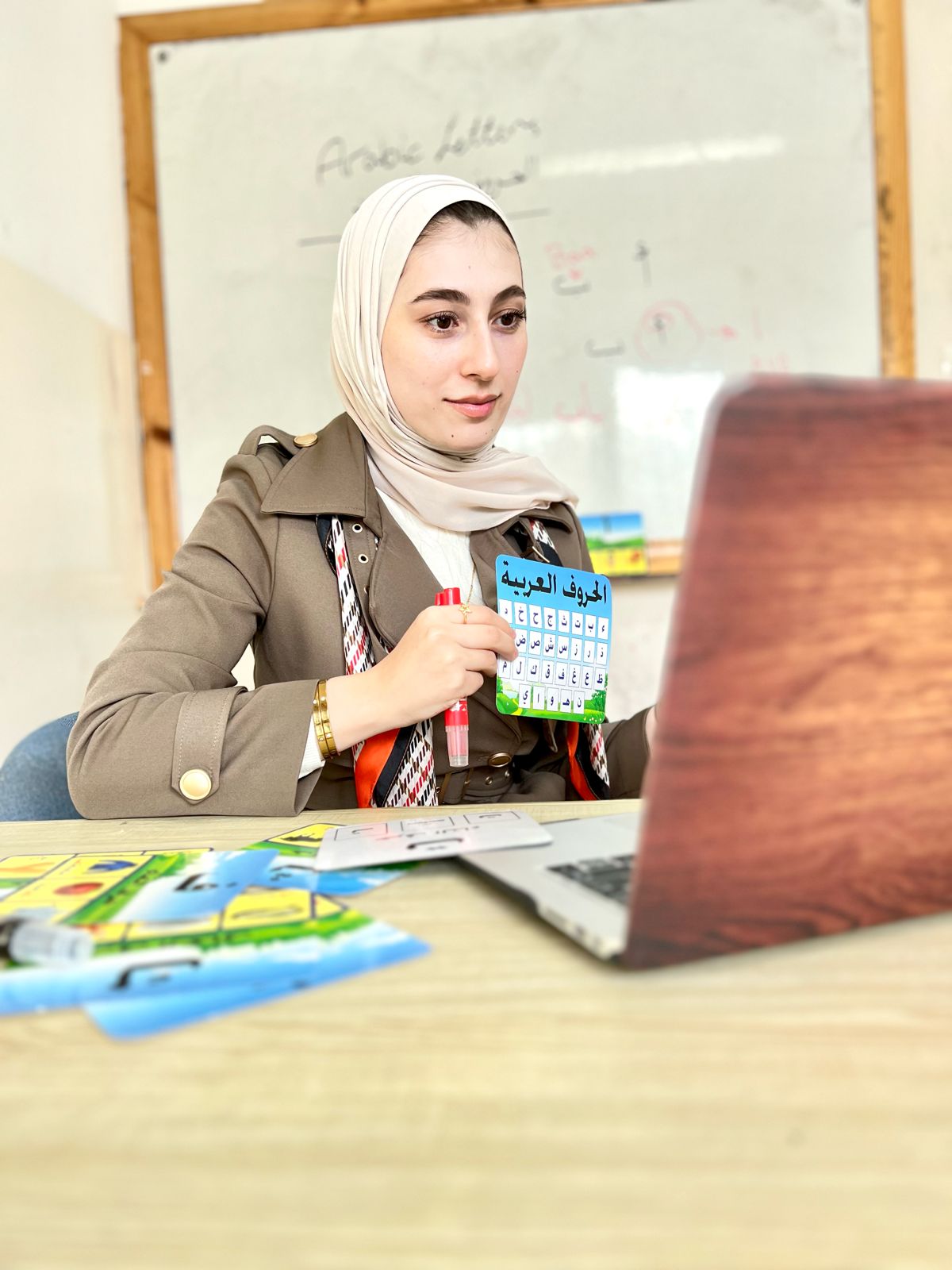
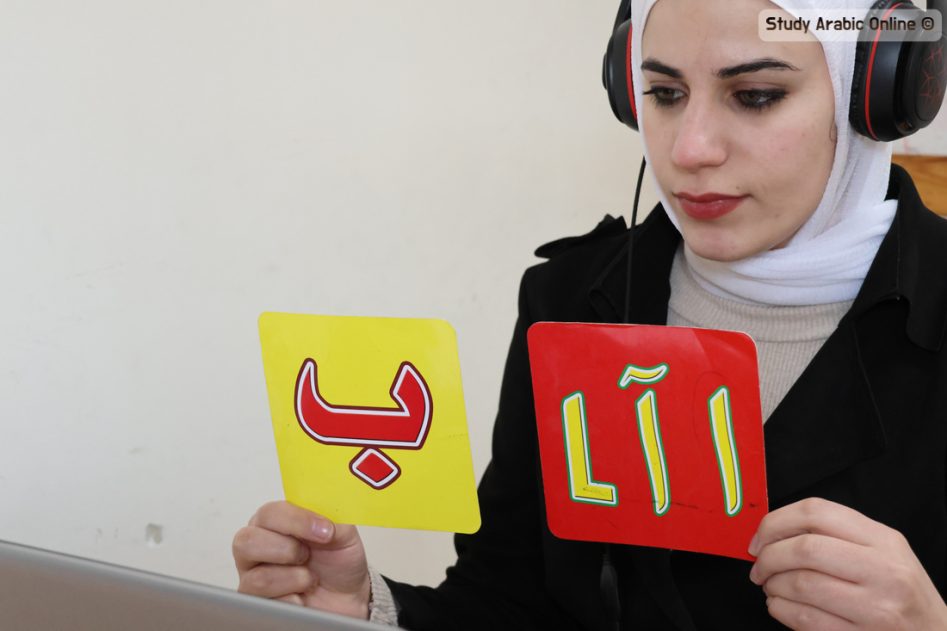
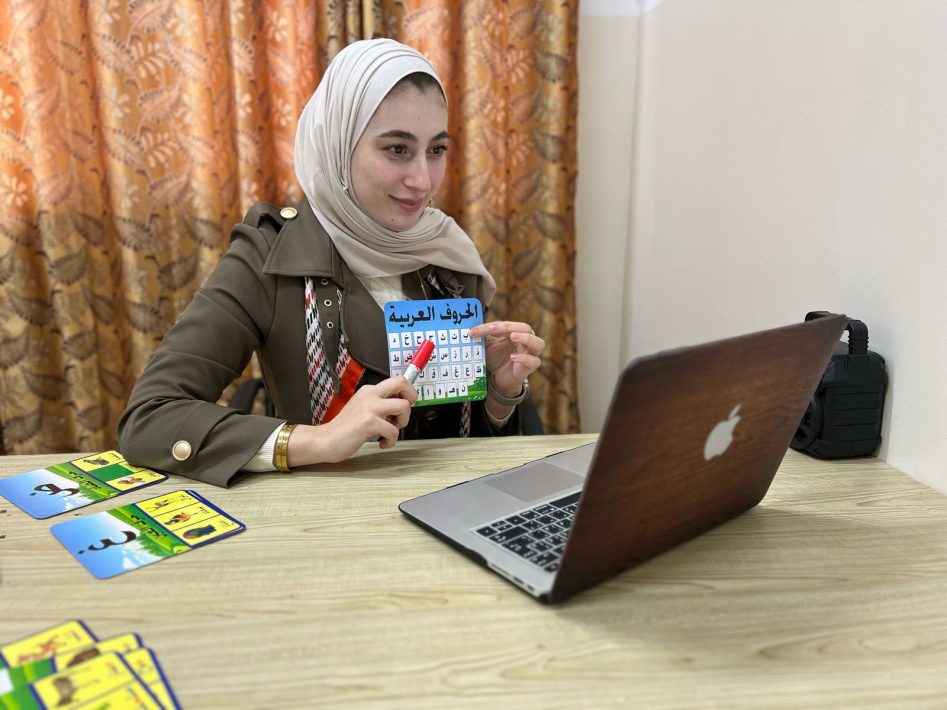
Additionally, we provide Online Arabic courses for children and young people aged 10 to 16. Perfect for those who are eager to learn about the Arabic language and culture, these elementary classes differ from adult learning in content as well as teaching method, e.g., image recognition and games play a huge role, as well as the ability to access children’s Arabic digital media, including TV shows, books, and articles on a wide range of subjects.
Our Online Arabic programs are an excellent way to introduce children to an authentic Arabic experience from the comfort of home. Specially designed for children in a virtual format, the course includes all picture books, articles on various subjects, and digital media. So if you are looking to introduce your child to the Arabic-speaking world, enroll them in our Arabic Online Program to begin their language journey!
What Levels of Arabic are Available?
1. Starter Levantine Arabic for Field Professionals
At the starter level, humanitarian workers and journalists are introduced to essential everyday expressions and phrases needed for basic field communication. This includes greetings, introductions, and simple question-and-answer exchanges related to personal details and immediate needs. By the end of this level, learners will be able to initiate basic conversations with local communities, helping them establish first contact and navigate simple interactions in the field.
2. Beginner Levantine Arabic for Field Communication
Designed for those with a basic foundation in Arabic, this level focuses on commonly used phrases relevant to daily life and fieldwork. Learners will gain the ability to discuss topics such as family background, local environments, directions, and basic services. Humanitarian workers and journalists will be able to handle routine conversations, describe situations simply, and better understand the immediate needs and concerns of the people they engage with.
3. Intermediate Levantine Arabic for Professional Engagement
At the intermediate level, learners develop the ability to communicate more confidently in a variety of real-world scenarios. This includes discussing work-related topics, travel situations, and community issues that may arise during field assignments. Participants will also learn to express opinions, describe events and experiences, and understand more complex conversations—skills that are essential for conducting interviews, reporting accurately, and engaging meaningfully with local populations.
4. Advanced Levantine Arabic for In-Depth Fieldwork
At the advanced level, humanitarian workers and journalists achieve a high degree of fluency and comprehension. They will be able to understand complex discussions, including social, cultural, and political topics relevant to their work. Learners can communicate with clarity and confidence, produce detailed reports or narratives, and articulate informed perspectives. This level enables professionals to operate independently in Arabic-speaking environments and engage deeply with communities, ensuring more accurate reporting and effective humanitarian response.
Programs Offered Year-round
Furthermore, we offer our online Arabic lessons and immersion classes year-round (spring, summer, fall, and winter).
Each session lasts 90 minutes and can be scheduled once or twice a week. You can book anywhere between 10 and 100 hours of tuition, with all books and necessary resources provided by us
A Program Tailored for You!
As one of our online Arabic students, you can choose the time and level of study that best suit your needs, language ability, learning preferences, and any other requests. A key decision is selecting the specific Arabic dialect you wish to learn.
The Excellence Center in Palestine offers a range of dialects, including Modern Standard Arabic, Classical Arabic, Colloquial Palestinian Arabic, all Levantine (Shami) Arabic dialects, and Ammiya Arabic
List of Levantine Arabic Lessons for Humanitarian Workers and Journalists:
The Excellence Center in Palestine is delighted to offer a wide selection of Levantine Arabic dialects for Humanitarian Workers and Journalists to learn. Whether you want to learn or improve your Arabic for work, business, traveling, religious reasons, or anything else, our Arabic courses will accommodate your language requirements.
There is often a big difference between the various Arabic dialects in the Arab world. Therefore, we recommend carefully choosing a dialect to study, particularly as a first-time learner. For absolute beginners, we generally recommend Modern Standard Arabic or Levantine Arabic (a dialect widely understood across many Arabic-speaking countries).
Here is a full list of the dialects we offer in Levantine Arabic Lessons for Humanitarian Workers and Journalists:
1. Palestinian Arabic Online Course
Palestinian Online Course: The Palestinian dialect, a colloquial form of Arabic known as Ammiya, belongs to the Southern Levantine dialect group and is widely spoken across Palestine. Notably, this dialect closely resembles Modern Standard Arabic, or Fusha, making it a practical choice for learners seeking to improve conversational skills and formal Arabic comprehension.
Because the Palestinian dialect preserves many aspects of classical Arabic pronunciation, with only minor adjustments, it can serve as an entrance point for understanding Fusha. Thus, mastering this dialect not only enables effective communication in Palestine but also strengthens your proficiency in Standard Arabic.
2. Studying Levantine Arabic Online
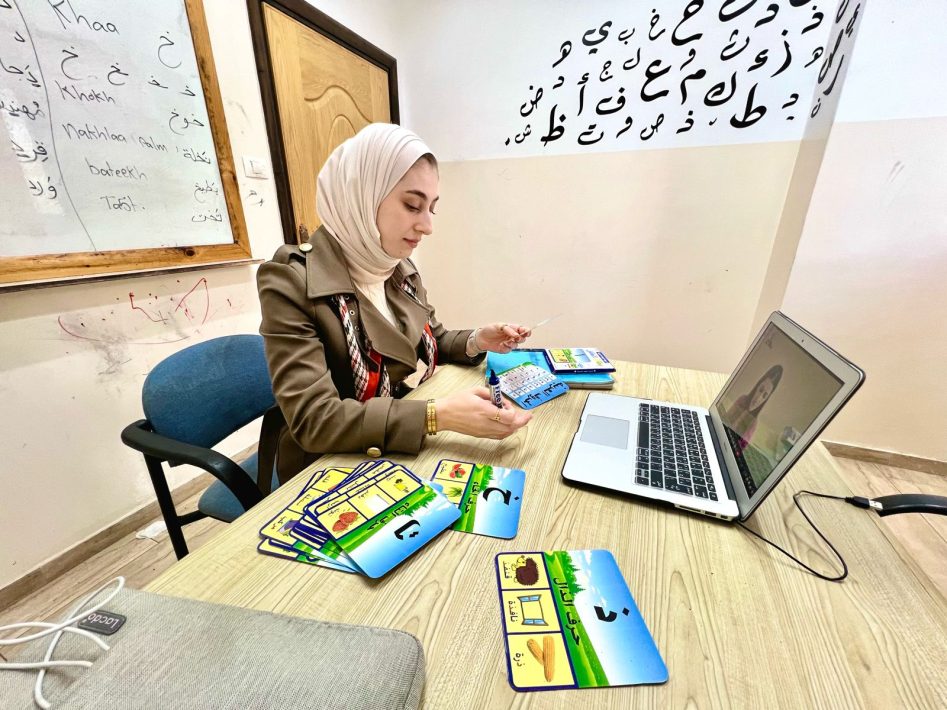
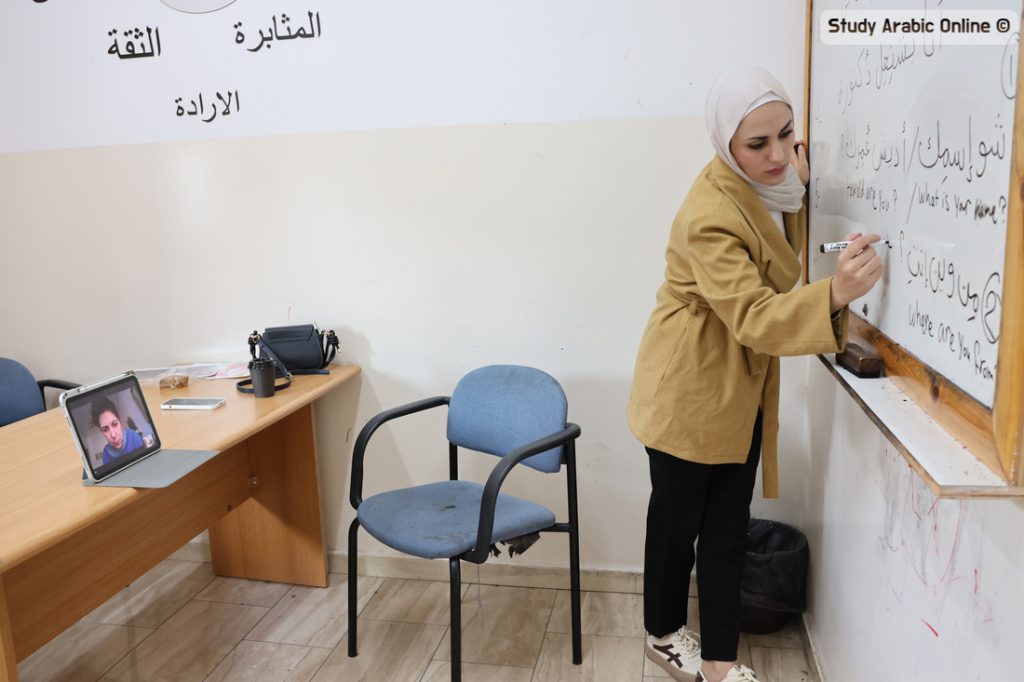
Studying Levantine Arabic Online: Levantine Arabic, also known as Shami Arabic or the Ammiyya dialect, is a fantastic option for those who want to learn this widely spoken and increasingly important dialect from the comfort of their home. Spoken by approximately 42 million people across Jordan, Palestine, Lebanon, and Syria, Levantine Arabic is a cornerstone of the Levant region. It is easily understood throughout the broader Middle East and North Africa (MENA) region.
This dialect bridges linguistic gaps, enabling communication with people in countries like Egypt, Morocco, Tunisia, and the Gulf states. Studying Levantine Arabic online allows you to immerse yourself in the language, practice with other learners, and build the skills needed to connect with diverse communities throughout the Arab world.
3. Jordanian Arabic Online Course
Jordanian Online Course: The Excellence Center in Palestine provides a range of Jordanian Arabic online programs tailored to assist non-Arabic speaking expatriates with integration. Our courses place a strong emphasis on practical conversation, focusing on vocabulary relevant to daily situations. Jordanian Arabic, also known as Jordanian Colloquial Arabic (Ammiya Jordanian Arabic) or simply Jordanian, is a variant of Arabic spoken in Jordan. It falls under the category of Levantine Arabic (Shami Arabic), encompassing a group of Arabic dialects spoken in the Levant region, which includes Jordan, Lebanon, Syria, and Palestine.
In contrast to Modern Standard Arabic, which is used in formal settings and written communication, Jordanian Arabic is the spoken language in everyday conversations. It reflects the local culture and incorporates colloquial expressions specific to Jordan. Acquiring proficiency in Jordanian Arabic is especially advantageous for expatriates or individuals seeking to communicate effectively with their local Jordanian community.
4. Study Egyptian Arabic Online
Study Egyptian Arabic Online: The Excellence Center in Palestine offers a comprehensive range of intensive and non-intensive Egyptian colloquial online Arabic courses. Beginning with the Starter Course and working through to the Advanced. The online Arabic lessons offered by the Excellence Center in Palestine are as diverse and far-reaching as Arabic culture itself.
Dealing with all aspects of language learning, our Egyptian online Arabic programs focus on phonetics, conversation, writing, reading, and listening comprehension, as well as learning common idioms, completing daily tasks, and discussing various subjects suited for your course level. By doing so, this ensures you have a wide range of understanding of Arabic.
5. Study Lebanese Arabic Online Course
Lebanese Online Course: The Excellence Center in Palestine offers live, interactive group courses and private lessons in Lebanese Arabic year-round (spring, summer, fall, and winter). Our experienced teachers work with learners of all ages to improve their Arabic proficiency, especially Lebanese Arabic. Our group courses follow an organized curriculum called Lebanese Arabic from Scratch, designed for learners of all abilities.
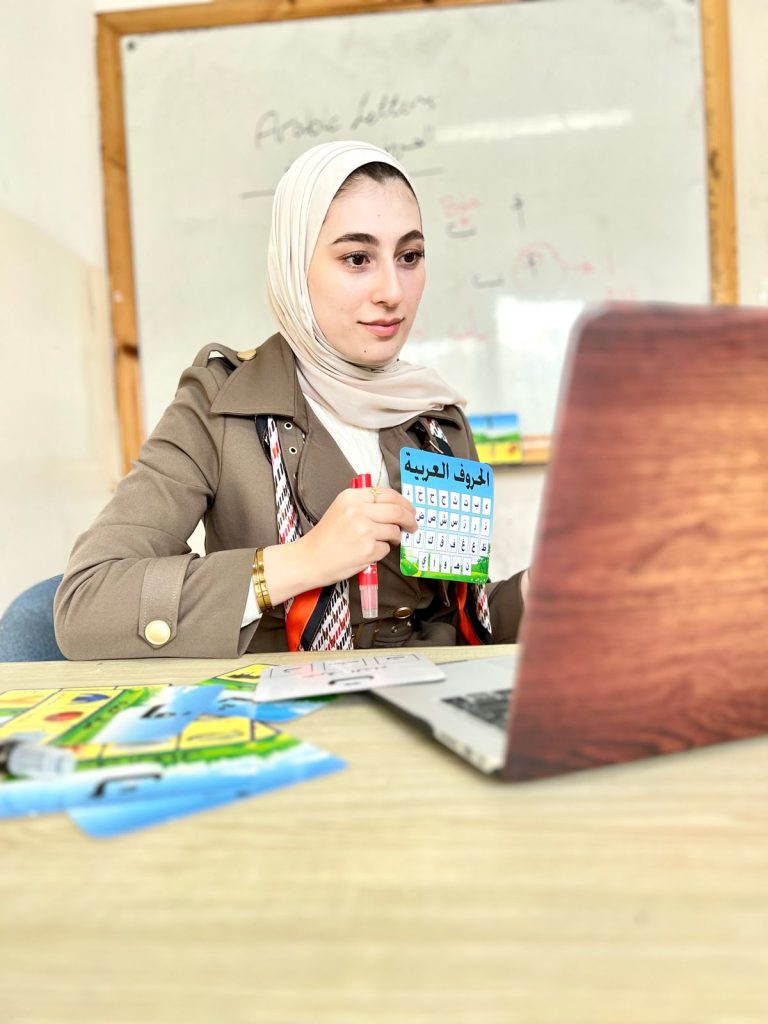
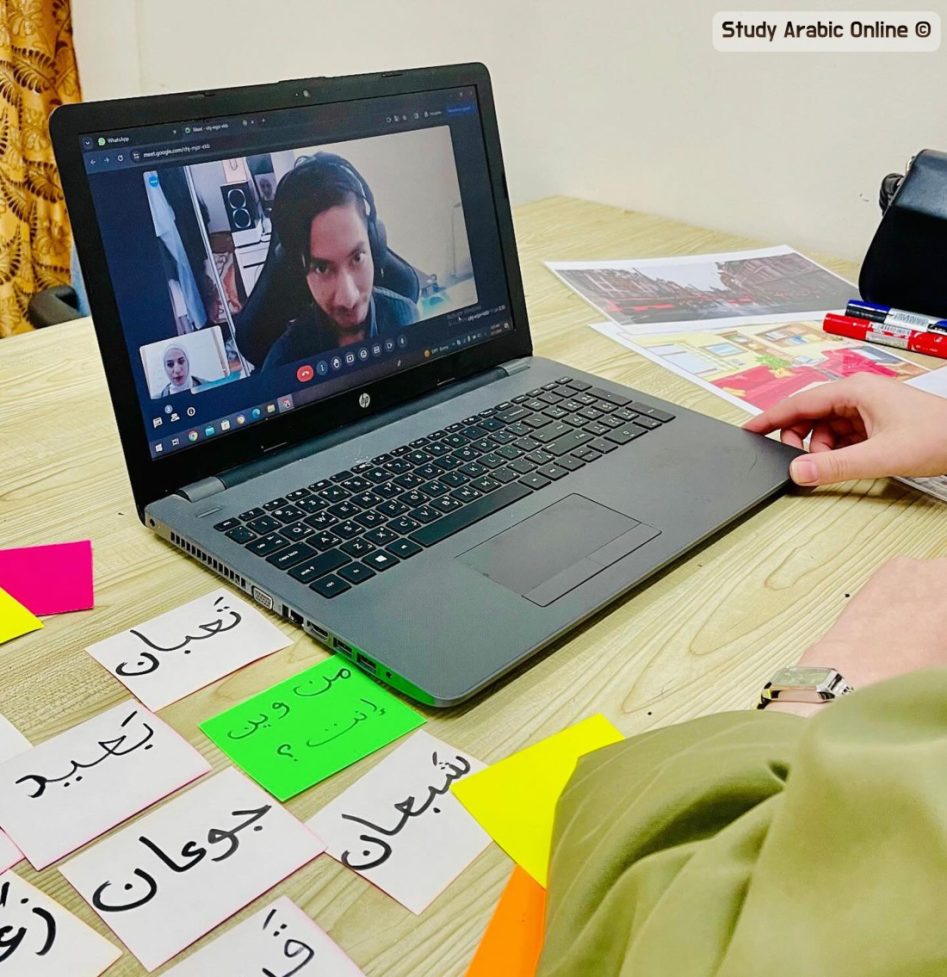
Whether you are just beginning with your Arabic journey or are already an advanced learner, with multiple difficulty levels, one of our courses will be the right fit for you. Lebanese Arabic, also known as Ammiyya dialect, is a variety of Levantine Arabic (Shami Arabic) native to Lebanon. Because of the significant influences from other Middle Eastern and European languages, it is distinct from other Arabic dialects.
6. Syrian Arabic Online Program
Syrian Online Course: The Study Syrian Arabic Online Program is a valuable opportunity for those who want to learn and study the increasingly relevant and critical dialect (also known as Ammiya, Shami, or Levantine Colloquial Arabic) and practice with other students. Shami Arabic is spoken by nearly 42 million people in four Arab countries: Jordan, Palestine, Lebanon, and Syria.
Syrian Arabic (Levantine dialect) is the most easily understandable dialect for people in the MENA region (including countries of the Gulf and Arab countries in the northernmost areas of the African continent, such as Morocco, Tunisia, Algeria, Egypt, and Libya) and is the dialect most similar to Modern Standard Arabic. Its wide comprehensibility allows speakers of this dialect to communicate with a broad audience of Arabic speakers. Thus, learning the Shami dialect is a gateway to connecting with people across a wide, culturally diverse region.
7. Study Modern Standard Arabic Online
Study Modern Standard Arabic Online is a great opportunity to learn a form of Arabic that is understood by people in twenty-two countries throughout the Arabic-speaking world. By taking this online course, you will learn the form of Arabic that is most often used in literary texts, in the press, in education, and in official transactions. This form of Arabic is also a direct descendant of the classical Arabic that is found in the Quran and other historical texts.
Studying Modern Standard Arabic Online provides students at every level with a comprehensive study of Arabic’s beautiful and poetic features. They will learn all about its formulaic sentence structure, expressive vocabulary, and artistic script. Modern Standard Arabic (MSA) was first developed in the 19th and 20th centuries as a way for Arabic publications to reach a wider audience without having to navigate the complexities of various dialects. Since its initial development, MSA has quickly become the contemporary standard for literary, legal, and academic publications and is widely used internationally.
8. Online Arabic for Kids and Teens
Online Arabic for Kids: The Excellence Center in Palestine offers online Arabic courses for children and young people aged 10 to 17 years old. Perfect for anyone eager to learn about the Arabic language and culture, these elementary classes differ from adult learning in content as well as teaching method, e.g., image recognition and games play a huge role, as well as the ability to access children’s Arabic digital media, including TV shows, books, and articles on a wide range of subjects.
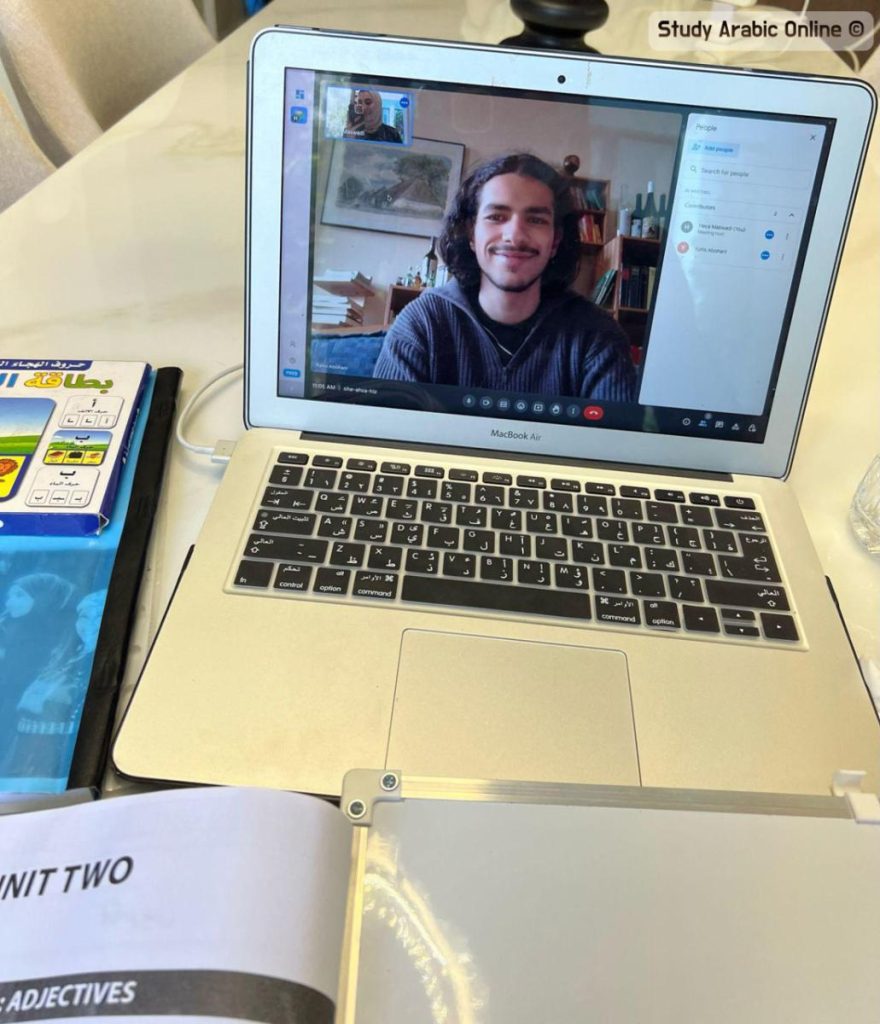
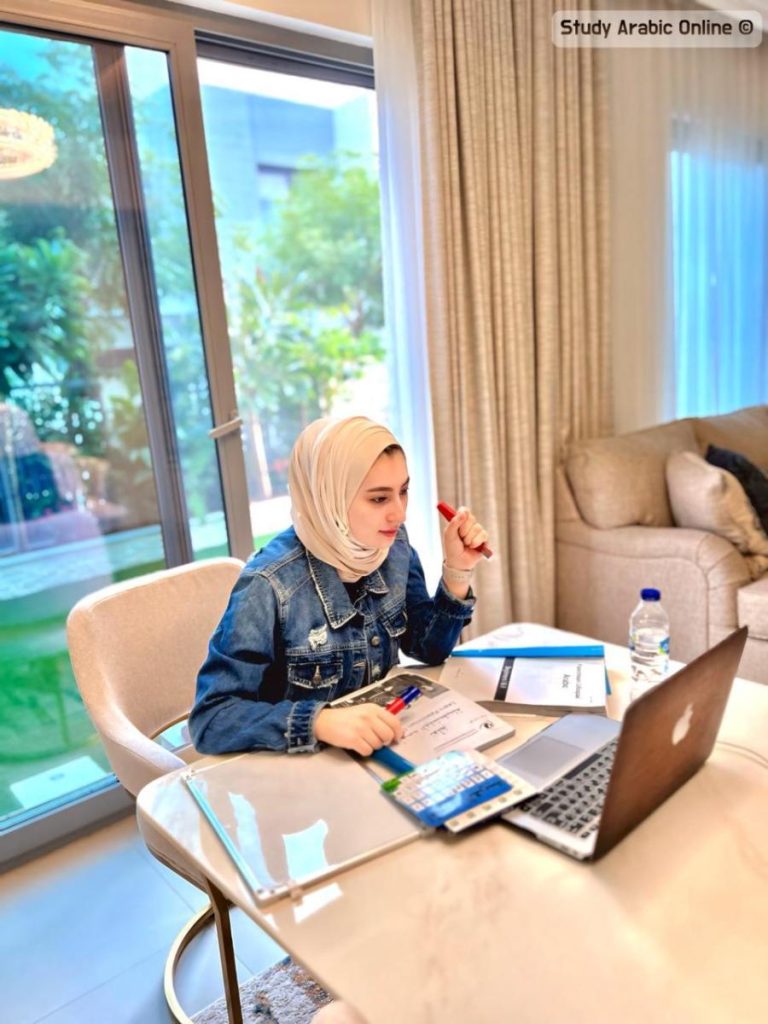
Our online Arabic courses are an excellent way to introduce children to an authentic Arabic language, culture, and media from the comfort of home. Specially designed for children, the course includes age-appropriate picture books, articles, and digital media in a virtual format. If you are looking to introduce your child to the Arabic-speaking world, then enroll them in our Arabic Online Program to begin their language journey!
Where and How?
We offer Arabic language classes online via Skype, Zoom, WhatsApp, Facebook Messenger, FaceTime, Google Meet, or any other online platform.
Levantine Arabic Lessons for Humanitarian Workers and Journalists: Overview
| The platform of an online Arabic course | (Google Meet, Facebook, Zoom, WhatsApp, etc) |
| Arabic Course duration | 10-100 Hours |
| Hours per week | 1-4 (Flexible) |
| Arabic session length | 45 Minutes |
| Cost of 10 Arabic sessions | 199 Euro (Confirm Prices Here) |
| Average students per class | 1 (Once to One Arabic Course) |
| Participants | 16-75 years old 10-16 (Children) |
| Days of the week | Saturday-Friday |
| Levels | 6 Levels (Starters to Advanced) |
| Time of classes | Agreeable |
| Program’s reviews | Reviews and ratings on Gooverseas.com Reviews and ratings on Goabroad.com Participants video testimonials |
| University Credit | Available |
| Arabic books | Available in PDF format |
| Registration Fee | 30 Euro |
Program Costs
| Arabic Hours/Sessions | Prices in Euros |
| 10 | 199 |
| 20 | 399 |
| 30 | 599 |
| 50 | 999 |
In addition to the program fee, students must pay a 30-euro registration fee.
Awards And Recognitions
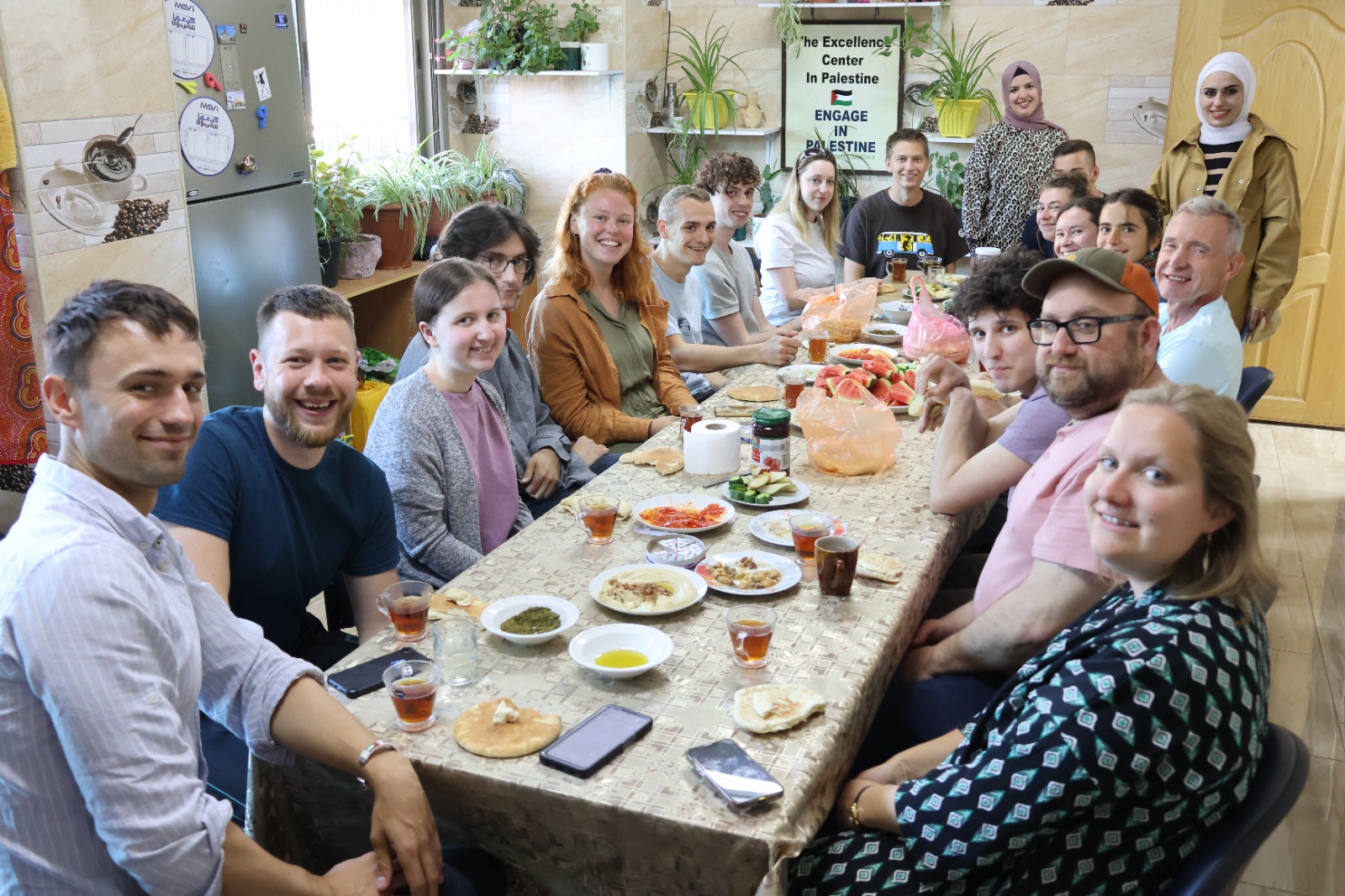
The Excellence Center in Palestine has been honored with several prestigious Community Awards and recognized as the Best Language School and Top Volunteer and Internship Program Provider for 2019, 2021, 2022, 2023, 2024, and 2025. For more details, please visit our profiles on GoOverseas.com and GoAbroad.com.





- +1000 reviews (96.5%) on gooverseas.com
- +190 reviews (96%) on goabroad.com
- Participants’ video testimonials
- Our Awards
Application Form and Booking Your Arabic Course
Please email us at Info@ecpalestine.org to request the application form, using ‘Levantine Arabic Lessons for Humanitarian Workers and Journalists‘ as the subject line. We will send the form to you promptly. We look forward to hearing from you!
Conclusion
Levantine Arabic lessons through the Excellence Center in Palestine offer humanitarian workers and journalists a powerful tool for enhancing their impact and effectiveness in the field. By gaining proficiency in the local dialect, professionals can communicate more clearly, build stronger relationships, and ensure that the voices of local communities are accurately represented. Language becomes a bridge that fosters trust, cooperation, and mutual understanding.
In high-stakes environments where clarity and sensitivity are essential, the ability to speak and understand Levantine Arabic can significantly improve both the quality of work and personal safety. It allows journalists to capture authentic stories and humanitarian workers to better assess needs and deliver support. This practical advantage makes language learning an essential investment rather than an optional skill.
Ultimately, learning Levantine Arabic with the Excellence Center in Palestine is about more than communication—it is about connection, empathy, and effectiveness. With the support of structured online lessons and experienced instructors, professionals can develop the linguistic and cultural competence needed to thrive in their roles. This journey not only enhances professional performance but also contributes to more meaningful and responsible engagement in the region.
Contact Us
If you have any questions, please feel free to contact us at:
Study Arabic Online: https://studyarabiconline.org/
EC Website: https://excellencenter.org/
Instagram: https://www.instagram.com/excellence.center
Facebook page: https://www.facebook.com/ExcellenceCenter
YouTube page: https://www.youtube.com/@theexcellencecenterinpales4961
Tags: Arabic for journalists, Arabic for NGOs, learn Levantine Arabic online, Levantine Arabic for humanitarian workers, Study Arabic Online courses